Write a Bestselling
Police Procedural Novel
In a Weekend
A complete novel-writing system. Three files. ChatGPT or Claude. A credible, series-ready Police Procedural novel... plus a seven-module course and the Audio Dollars short-story engine. Watch the video.
Get The Police Procedural Writing System
✓ Beginner Friendly✓ Uses Your ChatGPT or Claude✓ No API Keys
i. The Story
A Hot Mystery Niche. And The Framework You Kept Asking Me To Build.
One request has kept showing up from my own Co-Author members: “When are you building Police Procedural?” Not a generic crime prompt with a badge pasted on it. A real framework for the cases, teams, procedure, evidence, continuity, and series engine that make this genre work.
So I stopped saying “soon” and built it. Here is exactly what you are getting.
The Genre
92 Million Books. 35 Million Rebus Sales. 21 Number-One Bestsellers.
You know these stories. A serious crime lands on a working team. The scene gives them fragments. Witnesses contradict each other. Records arrive late. The first theory looks good until one ordinary fact refuses to fit. And chapter by chapter, the disorder becomes a case the investigators can finally prove.
That is the pleasure of Police Procedural: watching competent, fallible professionals build the truth together. The interview that changes when a record comes back. The analyst who sees the connection the lead missed. The briefing where three weak lines become one strong one. The authorized operation that pays off work planted ten chapters earlier. The reader gets the suspense of a mystery and the deeper satisfaction of seeing the machine work.
And commercially, the genre carries one of fiction's strongest repeat-reader shapes: the case closes, but the professional world continues. Same investigator. Same team. Same agency and region. A fresh central crime in every book, fully solved by the last page. The reader finishes satisfied... then immediately wants to walk back into that squad room when the next call comes.
That is how Police Procedural turns a single book into a reader's new obsession. Bosch. Vera. Rebus. Grace. These are not merely famous titles. They are detectives, teams, and places people choose to return to for case after case... on the page and on television. The reader knows the feeling she wants. Your opportunity is to give her a new investigator whose name belongs in that sentence.
92M+
Michael Connelly books sold worldwide... with Harry Bosch at the center of a crime-fiction empire that expanded across multiple television series.
35M+
Inspector Rebus novels sold... one detective, one city, and a series readers have followed for more than three decades.
21 #1s
Sunday Times number-one bestsellers for Roy Grace creator Peter James... backed by more than 23 million global book sales.
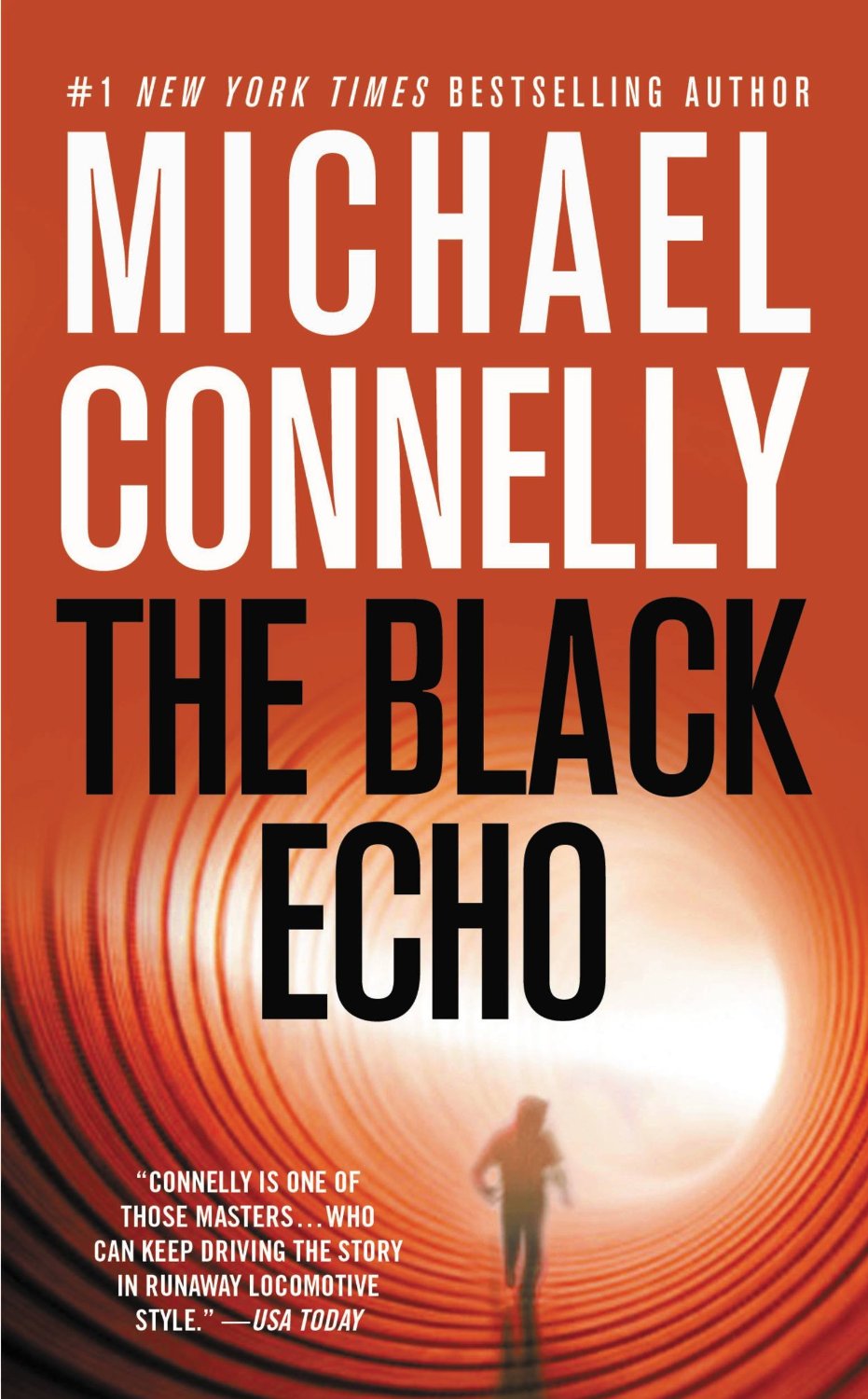 Harry Bosch
The Black EchoA city, a personal code, and an LAPD detective readers follow from one hard case to the next.
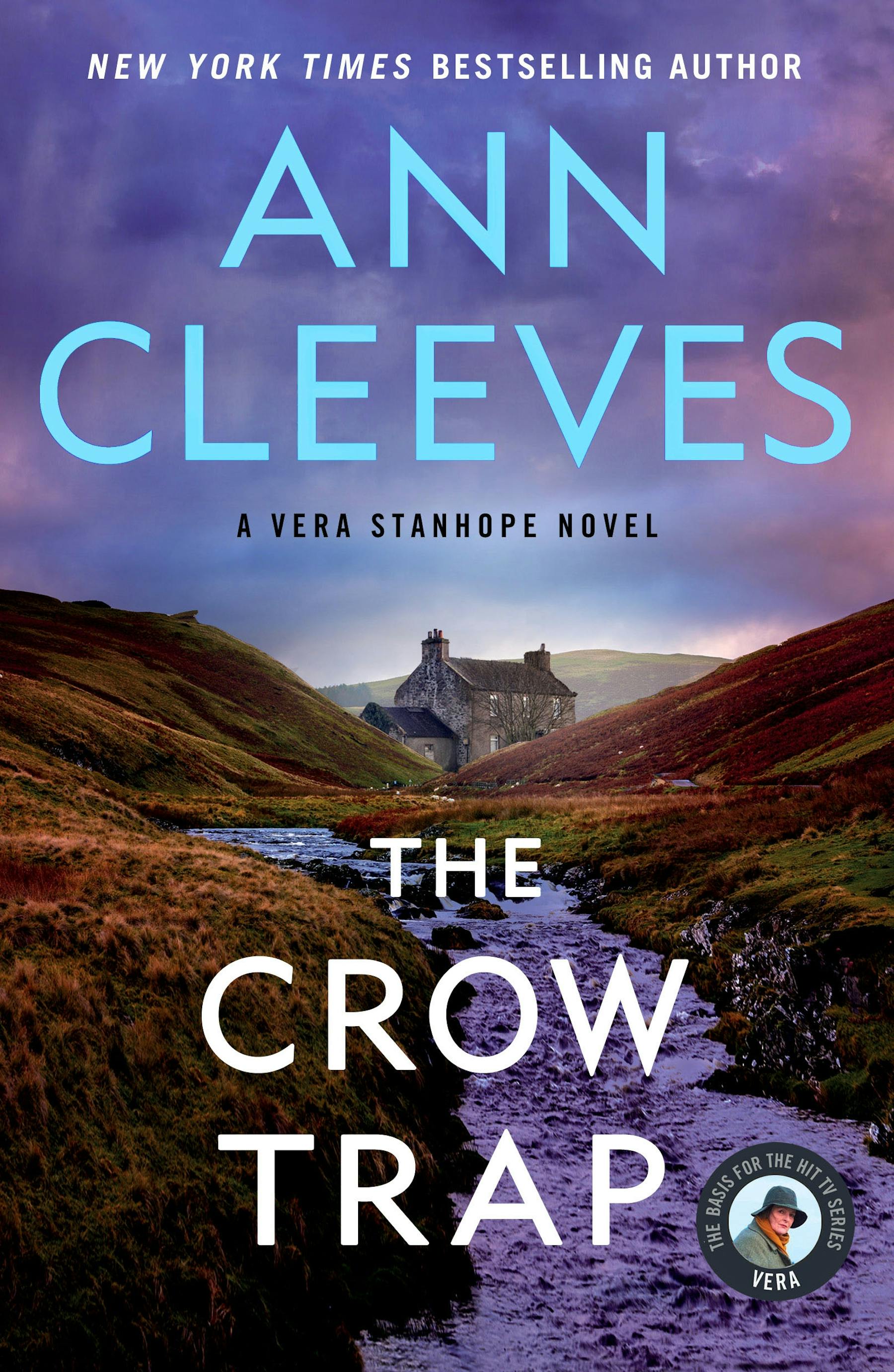 Vera Stanhope
The Crow TrapA singular lead, a working team, and a landscape readers recognize before the case even begins.
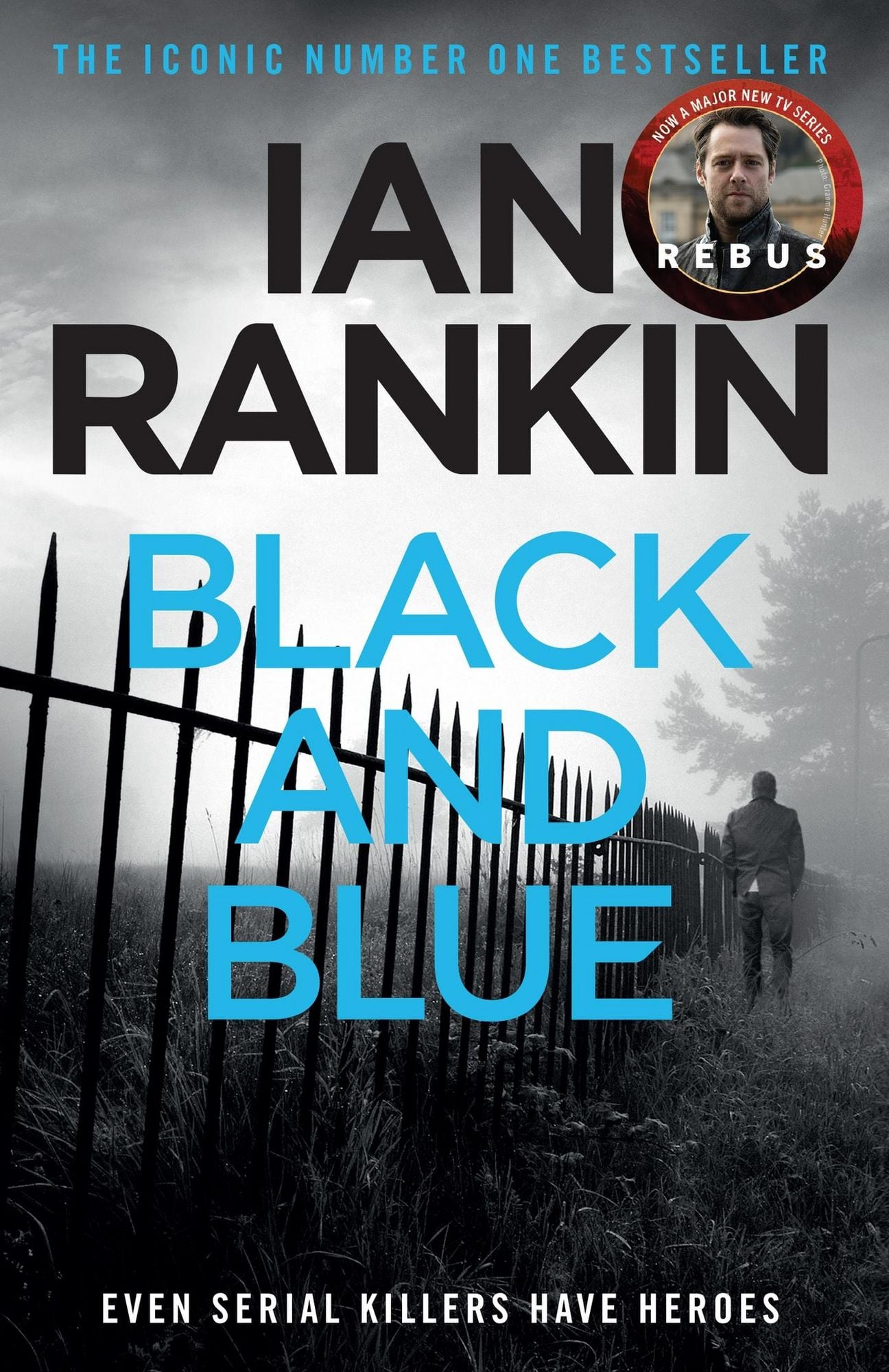 John Rebus
Black and BlueA flawed investigator and a lived-in Edinburgh that make the whole backlist feel like one world.
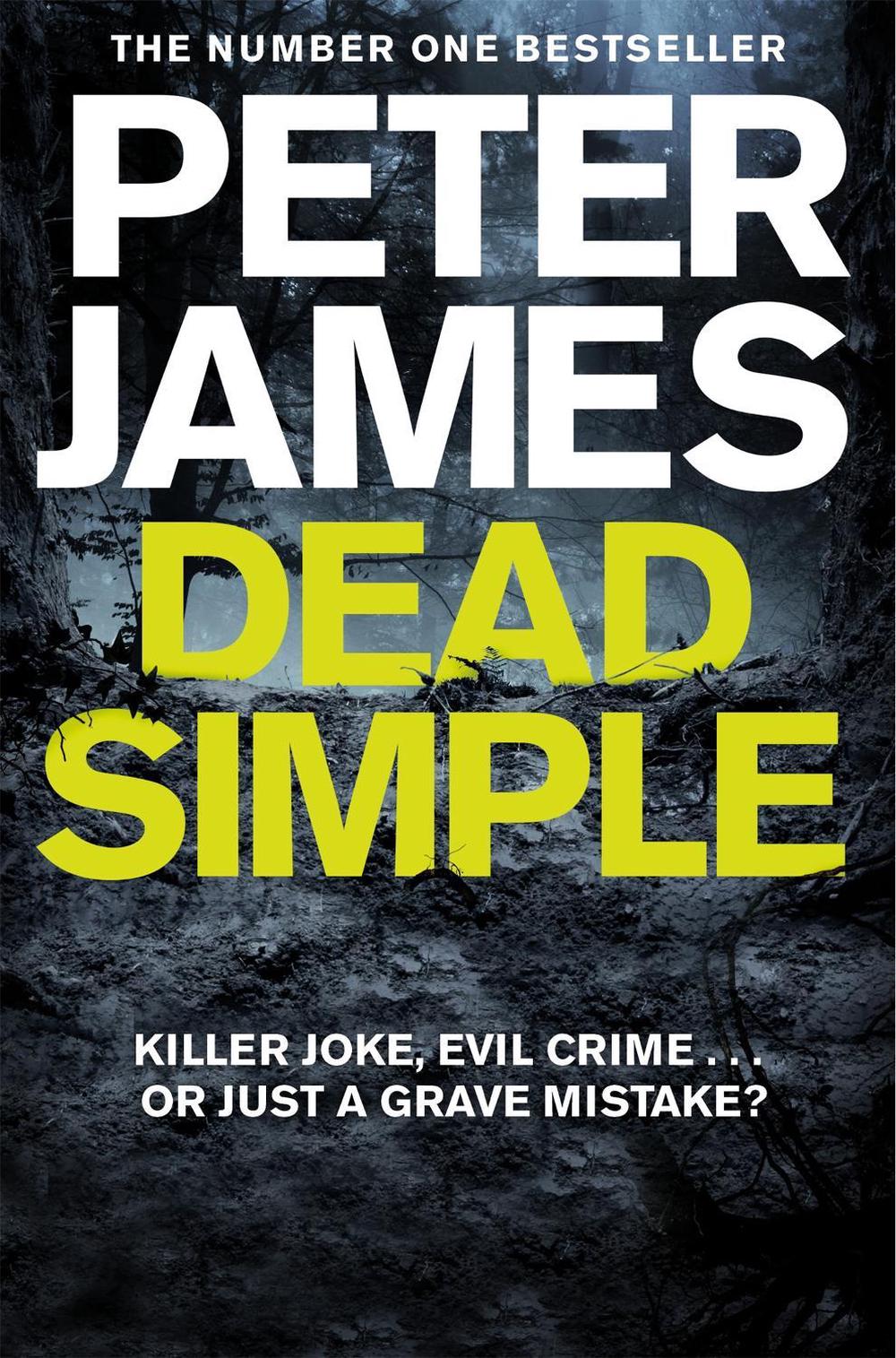 Roy Grace
Dead SimpleA durable Brighton case engine built for bestselling novels, returning readers, and television.
One genre. A 92-million-copy crime author. A detective with more than 35 million sales of his own. A twenty-one-time number-one bestseller. A multi-million-copy author behind three hit television series. And four investigators famous enough to sell a book by surname alone. Police Procedural does not merely produce popular novels. It produces characters who become franchises.
That is the prize on this shelf: a named investigator, a professional world, and a territory readers want to return to every time a new body drops. The central crime gives them a reason to buy this book. The detective and the team give them a reason to buy every book after it. And that franchise shape is not reserved for the household names above. Look at what is happening on the Amazon shelf right now:
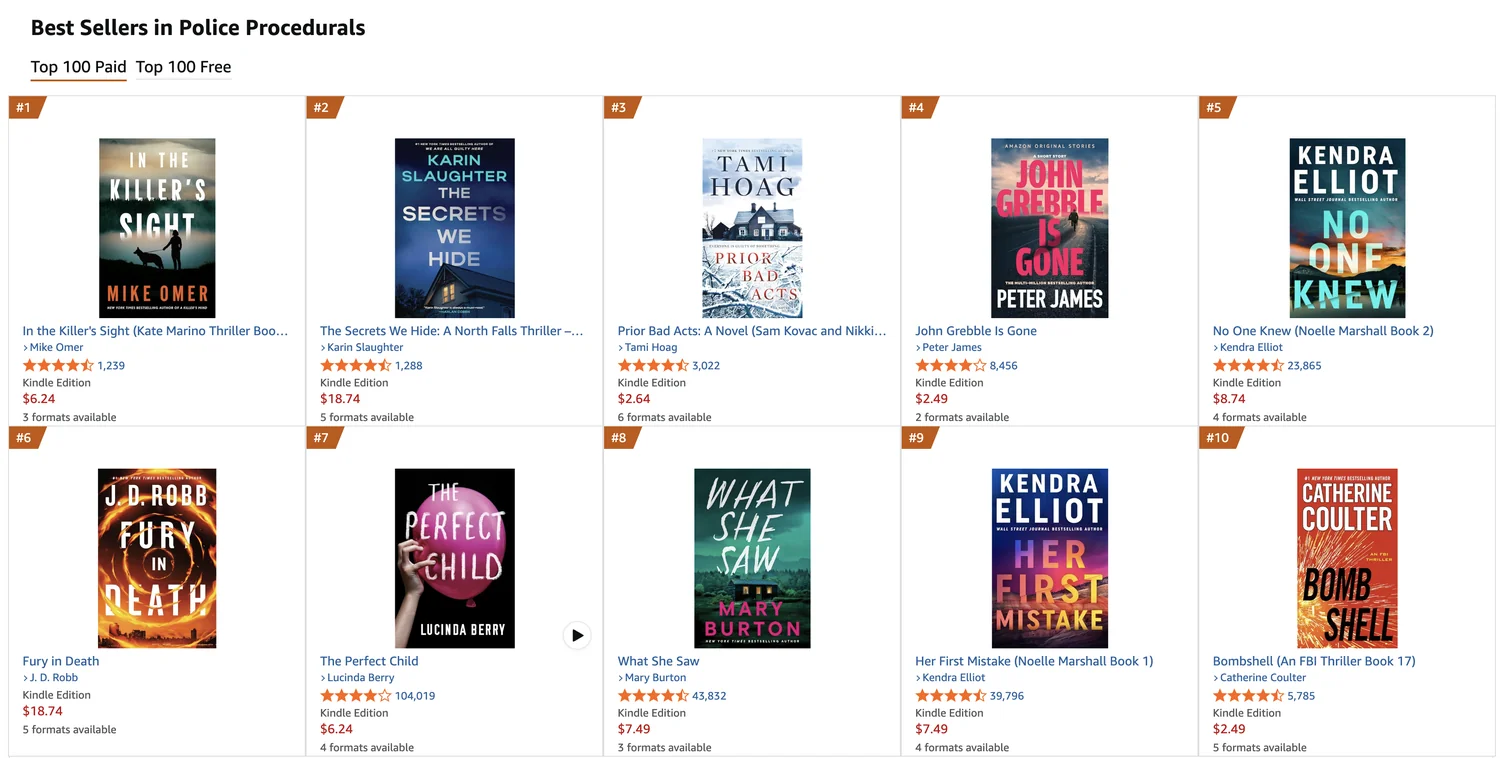
The names above prove how high this genre can climb. The live list proves the ladder is still standing there for somebody new. In the Killer's Sight is sitting at #1 with just 1,239 ratings. Not fifty thousand. Not even five thousand. A book can reach the very top of this shelf without first becoming an untouchable legacy phenomenon.
And look at what is charting beside it. Kendra Elliot has books one and two of the same series inside the Top 10 at the same time. Catherine Coulter has book seventeen of her FBI Thriller series there too. That is the business model in one screenshot: a new series can break through, one case can immediately sell the next, and a detective readers love can keep the backlist earning seventeen books later.
The shelf is busy and mixed... and that is the second opportunity. Plenty of books borrow the Police Procedural label while delivering a generic thriller, a lone hero, or a laboratory miracle. The real genre reader knows the difference. Give that reader a professional world she trusts, a team she wants to rejoin, and a case that earns its ending... and you are not merely publishing one book. You are building a catalog where every new case can sell the ones behind it.
ii. The Output
This Is What the System Produces
Before I tell you how the system works... let me show you what it writes. First draft. One pass. No human editing.
The system does not imitate one author. It gives you nine original voice positions, each anchored to a recognizable high-level tradition and written from scratch. You choose the register at setup. The framework holds it across the book.
Grant took the parking receipts from the envelope and laid them beside the stills from the service entrance. Four receipts covered the hour before the alarm. Three belonged to employees whose cars appeared on camera. The fourth had been paid in cash at 8:42.
She called the attendant back into the office and asked him to describe the driver again. He gave her a blue jacket, close-cut hair, average height. Grant turned one still toward him. The image showed a figure at the machine, face hidden by the raised door of a delivery van. The jacket looked black on camera. She asked about the van. The attendant leaned closer and put one finger beside a pale mark above the rear wheel.
Paint damage, he said. He remembered that much because the driver had checked it before leaving. Grant wrote the detail at the top of the request for traffic footage and moved the cash receipt into a fresh sleeve.
Notice what moves the scene. Not instinct. Not a miraculous flash. A receipt, a camera limitation, a witness asked the next useful question, and one concrete detail that earns the next request. The procedure is the drama.
Bell arrived in the incident room carrying a box of cables and the expression he usually reserved for budget meetings. He placed both on the desk in front of Fraser.
“Good news,” Bell said. “We own every connector manufactured since 1998.”
Fraser opened the box. “And the useful one?”
Bell lifted one shoulder and looked toward the digital bench. “Living abroad.”
Leah Morris slid a labeled evidence bag across the table. The adapter inside had come from the victim's office drawer. Bell's expression improved by a measurable degree. He checked the seal, read the exhibit record, and took the bag to the digital bench.
Twenty minutes later he returned with access times from the backup drive. The last successful login came after the building alarm had been set. Fraser circled the time on the board and reassigned the morning interviews. Bell reclaimed his cable box before anyone could mistake it for public property.
Same genre, different temperature. The team feels employed. The humor belongs to pressure and relationship. And underneath every line, the case keeps moving. You set the pace, procedure density, darkness, interiority, personal life, and humor. The system translates those decisions into pages.
Get The Police Procedural Writing System
✓ Beginner Friendly✓ Uses Your ChatGPT or Claude✓ No API Keys
iii. The System
How the System Works
Three files. Six planning documents. One closed case. This is not a prompt bundle. It is a complete novel-production system built specifically for Police Procedural fiction... from the first seed through the final Story State that carries your investigator into the next book.
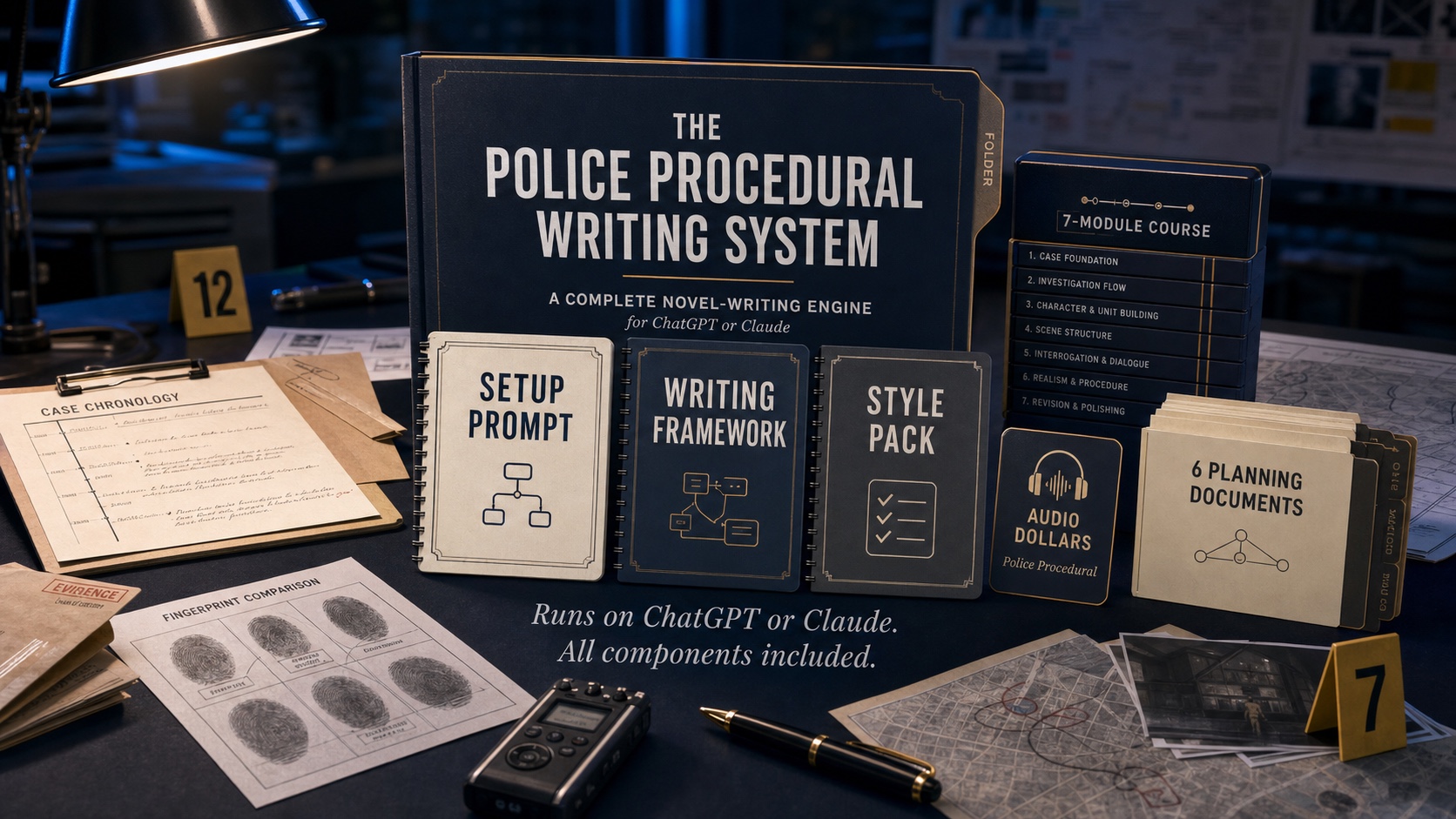
File 01Plan
Setup Prompt
The guided briefing room. Fifteen creative decisions turn your seed into a complete, evidence-locked novel plan.
File 02Write
Writing Framework
The case engine. It governs every chapter, advances CASE / TEAM / COST, and carries the investigation to a proved ending.
File 03Control
Style Pack
The quality-control desk. It removes AI tells and catches the shortcuts that make procedure feel fake.
File one is the Setup Prompt. Paste it into a fresh conversation and it walks you through fifteen decisions, one gate at a time. Your real or fictional jurisdiction anywhere in the world. Your agency. The serious crime. The investigator and team. The victim as a person. The offender and concealment. The evidence-lock. The ending. The voice. The series shape.
At every gate, it gives you developed options, an honest recommendation, and room to bring your own seed. Then it generates exactly six planning documents, one at a time. The genre's secret weapon is the Case File: the protected truth document that holds what actually happened, the evidence route, the revelation schedule, and the proof that must exist before the team acts. It never leaks concealed truth into the living Story State.
File two is the Writing Framework. It lives in the writing Project and governs every chapter. Six investigation phases. CASE, TEAM, and COST advancement. A Context Lock before prose so you can approve the chapter's exact logic. A one-pass audit after the draft. A clean handoff that puts case advancement first and keeps the next conversation honest.
File three is the Style Pack. It strips out the language that makes AI sound like AI, then catches the failure modes that destroy this particular genre: cop-instinct shortcuts, miracle forensics, jargon pasted over empty work, incompetent teams, lone-wolf climaxes, evidence that arrives too late, and confessions that solve cases the investigation never built.
And wrapped around all of it: a seven-module course that takes you from "what is a Police Procedural" to a finished, packaged book. It deserves more than a sentence... so it gets its own section, right below.
Runs on ChatGPT or Claude. Pick either... the system does the heavy lifting, not the model. No API keys, no special tools. Three files and the AI of your choice.
iv. The Course
You Are Not Left Alone With Three Files
Most AI writing products hand you a prompt and wish you luck. This one ships with a complete course... seven modules that take you from "I have never written fiction" to a packaged, positioned book sitting in the exact subcategories where your reader shops, with a second income stream running beside it. Not filler videos. Written, structured training you can read in an evening and execute the same weekend.
Seven Modules. Blank Page to Published.
- Module 1: Before You Begin. What you are holding, the two AIs it runs on... ChatGPT for squad-room energy, Claude for atmosphere and planning... and how the whole system fits together, down to the rule every book keeps: the case always closes, the life does not have to. No police experience needed, no shelf of procedurals read; it is all taught from zero. Ten minutes in, you know exactly what you are building and how.
- Module 2: Know the Genre. The retired detective's quiet nod as your standard, the clean test that separates a true procedural from a thriller with a badge, and THE CASE BUILT: an account creates a discrepancy, the discrepancy justifies the next move, and that chain is the plot. Plus the reader contract, THE INSIDER TEST, the fastest ways to lose her trust, and why fidelity is your edge on a busy, mixed shelf. You walk in understanding the genre better than most people writing in it.
- Module 3: Write the Genre. The decision stack that makes the book yours: the jurisdiction first, because ranks, powers and evidence timings all flow from it and the AI never bluffs one; three presets and six dials; an investigator and a team built as functions, not a television headcount; the victim, the field and a concealment that survives routine competent work; the evidence-lock and its three routes; three voice samples to hear; the series shape. Every lever explained, so you pull them on purpose.
- Module 4: Set Up Your Book. Put the Framework and Style Pack with your book, drop the Setup Prompt into one planning conversation, send one exact line, and run the seventeen-step setup: at every creative gate it offers three developed options, recommends one and waits for you. You come out the other side with all six planning documents, the Case File among them holding the answer, in an exact eight-file workspace. Covered step by step on both ChatGPT and Claude, so nobody gets lost.
- Module 5: Writing the Novel. The chapter routine itself: one fresh conversation per chapter, the hydration prompt, the Context Lock where you steer before a word of prose, the chapter written once and audited once, and the eighteen-field Story State swap that keeps the case straight from activation to outcome... with the Case File's truth kept from the team until the evidence earns it. A Final Story State at the end carries the team into Book 2. This is the module that turns planning documents into a manuscript.
- Module 6: Position the Genre. This genre has a shelf under Mystery that carries its own name, Police Procedurals, and the book was engineered to sit on it. The cover grammar of that bestseller list, tested at thumbnail size; two more categories chosen honestly, each one a promise to deliver; the subtitle pattern; the five-move blurb that sells competence under pressure; the keywords; and a check of the live store before you publish. Every signal tuned so the right reader clicks and the wrong one keeps scrolling.
- Module 7: Audio Dollars. The fifteen-minute audio short engine: one prompt, one fresh ChatGPT or Claude conversation with no files loaded, one complete case of about 2,100 words written for the ear... three full scenes, exactly one discrepancy, exactly one independent corroboration, one outcome before the listener leaves. It asks you nothing and writes in one pass, and it never bluffs a jurisdiction. Seed it with your own investigator and their next case if you like. Your second format, narration-ready.
People in this space sell thinner courses than this for $97... as the whole product. Here it is the wrapper around the actual engine. Read it once and you will know exactly how to do this, again and again. That is the point. Not one book. An operation.
v. Why Me
Why I Built This
I will be straight with you about where this came from.
Cozy Co-Author came first. Then Steamy Co-Author. The members who write with those systems are the ones who kept asking me for this genre, and a generic crime prompt was never going to be good enough for them.
So I built the machine this genre actually runs on. A protected Case File that holds the truth. A team that does the work. Evidence that has to exist before anyone acts on it. An ending the investigation earns.
In this genre, the procedure is the drama. That craft is what is in these files. Not a label on a generic prompt. A real engine for a real genre.
vi. The Audio Engine
Police Procedurals For Audio Dollars
The novel system writes books. Audio Dollars writes stories you can hear.
Audio Dollars is my fiction engine for audio narration. This system includes the complete Audio Dollars Police Procedural edition: a separate short-fiction engine that generates a finished, narration-ready case in a single pass. Not an outline. Not an unfinished draft. One activation, one focused team, a legitimate evidence route, a theory-changing return, an authorized action, and a jurisdiction-appropriate outcome... compressed into one satisfying listen.
Same genre. Same craft. Same professional causality. Different format. Different market. Different income stream. And crime fiction is one of audio's great genres: the commuter with a police procedural in her ears is a stereotype because she is real.
Give it a seed or tell it to surprise you. It writes the complete story with audio-first pacing and formatting, ready for narration and the platforms where listeners are already pressing play. Keep the investigator and write another case when you want the next episode.
Novels for KDP. Short stories for audio. Two formats, two income streams, one genre. Both included.
vii. Everything You Get
Here's Everything You Get
For Just $27 Today
A complete novel production system. From blank page to a publishable Police Procedural. Built by the creator of Cozy Co-Author and Steamy Co-Author. Runs on ChatGPT or Claude.
The System
The Writing Framework
The Writing Framework: six investigation phases, CASE / TEAM / COST, professional causality, THE INSIDER TEST, chapter Context Locks, audits, handoffs, and nine original voice positions.
The Setup Prompt
The Setup Prompt: a seventeen-step guided planning conversation covering jurisdiction, agency, case, team, victim, offender, evidence-lock, voice, outcome, and series intent.
The Style Pack
The Style Pack: removes AI tells and enforces genre-specific failure rules on every chapter.
Six Planning Documents
Exactly six generated planning documents: World Bible, Story Bible, Character Profiles, Case File, Chapter Outline, and Story State.
The Case File Truth Firewall
A protected Case File truth firewall so the AI always knows the solution without leaking it to the reader or inventing late evidence.
The Course
The Seven-Module Course
A seven-module course taking you through the genre, setup, chapter workflow, positioning, and series continuation.
The Bonus
Audio Dollars — Police Procedural Edition
The Audio Dollars Police Procedural edition: one complete bounded case written for narration in a single pass.
Runs on ChatGPT or Claude
Runs on ChatGPT or Claude. No API keys, no special tools. Three files and the AI of your choice.
Total value: $197 ... yours today for just $27
No upsell required to make it work. No subscription. No API keys. The complete system, delivered instantly. What you write with it belongs to you, and so does every dollar it earns.
Your Price Today: $27
✓ Beginner Friendly✓ Uses Your ChatGPT or Claude✓ No API Keys
viii. The Guarantee
Try It Risk-Free for 14 Days.
Here is the deal.
Get The Police Procedural Writing System today. Read the course. Run Setup. See what Claude or ChatGPT builds with you.
And if for any reason... or no reason at all... you decide it is not for you, just send me a message within 14 days and I will refund you in full. No questions asked.
I will be happy you gave it a try and we will part as friends. That is my promise to you.
But here is the thing...
Any novel you start during those 14 days? Yours. Any planning documents Claude or ChatGPT generates? Yours. Even if you start a novel during those 14 days and decide to keep going... still yours.
The risk is near zero. The potential is a detective readers want to follow, in a series where every new case can sell the ones behind it.
At some point the smart move is just to try it.
Get The Police Procedural Writing System
✓ Beginner Friendly✓ Uses Your ChatGPT or Claude✓ No API Keys
Look... if you have read this far, you are not just browsing. You are thinking about this seriously.
Good.
If you have wanted to write crime fiction and the blank page kept winning... this solves that. If you want a repeatable series built around a trusted investigator and a fresh closed case every book... this gives you one. If you want a shelf where a book with 1,239 ratings can sit at #1... this is how.
The system is ready. The ladder is still standing. The tools are in your hands.
Go write something.

P.S. One novel is a book. Three is a series. And this genre is built for series... the case closes, but the professional world continues. Same investigator. Same team. A fresh central crime in every book. The system that wrote the first one writes the rest.
P.P.S. You can try the entire system risk-free for 14 days. If it is not for you, you get your money back. The novel you started is yours to keep.
P.P.P.S. A book with just 1,239 ratings is sitting at #1 on this genre's bestseller list right now, on a shelf where the ceiling is measured in tens of millions of sales. $27 and a weekend is all that stands between you and that shelf.
FAQ
Do I need a fully developed story idea?
No. You do not need to arrive at setup with a solved murder and a wall full of string. Bring the part that excites you: one fragment, or the whole book in your head. If you want the system to lead, say "surprise me" and it will offer three starting directions.
Do I need to know real police procedure?
No. Choose any real or fictional jurisdiction anywhere in the world, and your agency. State what you want, and let the jurisdiction step verify how that place and agency actually work. If the AI is unsure about a place, it tells you exactly what is uncertain. It never bluffs.
Which AI and training do I need?
Your own ChatGPT or Claude, in the desktop app or your browser. No API keys. The seven-module course walks you through setup, click by click.
Get The Police Procedural Writing System
✓ Beginner Friendly✓ Uses Your ChatGPT or Claude✓ No API Keys